
From Leaf to Cup: The Complete Tea Production Process Explained
When enjoying a cup of premium tea, most people focus on the flavor, aroma, and experience in the cup.
Few stop to consider the remarkable journey that every tea leaf has taken before reaching their teapot.
Behind every exceptional tea lies a complex combination of nature, tradition, craftsmanship, and time. From carefully cultivated tea gardens to meticulous processing techniques, every stage of production influences the final character of the tea.
Whether you're drinking a delicate green tea, a fragrant oolong, a rich black tea, or an aged pu-erh, understanding how tea is made can deepen your appreciation for every sip.
In this guide from Teavra, we'll explore the complete tea production process, explaining how tea travels from fresh leaves growing in mountain gardens to the finished tea enjoyed by tea lovers around the world.
The Journey Begins: Growing Tea Plants
All traditional teas originate from the same plant:
Camellia sinensis
What ultimately makes green tea, black tea, white tea, oolong tea, and pu-erh tea different is not the plant itself, but how the leaves are processed after harvesting.
Tea plants thrive in environments that offer:
-
High elevations
-
Rich mineral soil
-
Consistent rainfall
-
Frequent mist
-
Moderate temperatures
-
Good drainage
Many of the world's most celebrated tea-growing regions are located in mountainous areas because slower growth often produces more concentrated flavors.
The quality of tea begins long before the leaves are picked.
Step 1: Tea Cultivation and Garden Management
Growing premium tea requires years of care.
Tea farmers carefully manage:
-
Soil health
-
Plant nutrition
-
Shade levels
-
Water management
-
Pest control
-
Harvest timing
Tea bushes are regularly pruned to encourage healthy growth and maintain an ideal harvesting height.
Well-maintained tea gardens often produce leaves with better aroma, sweetness, and complexity.
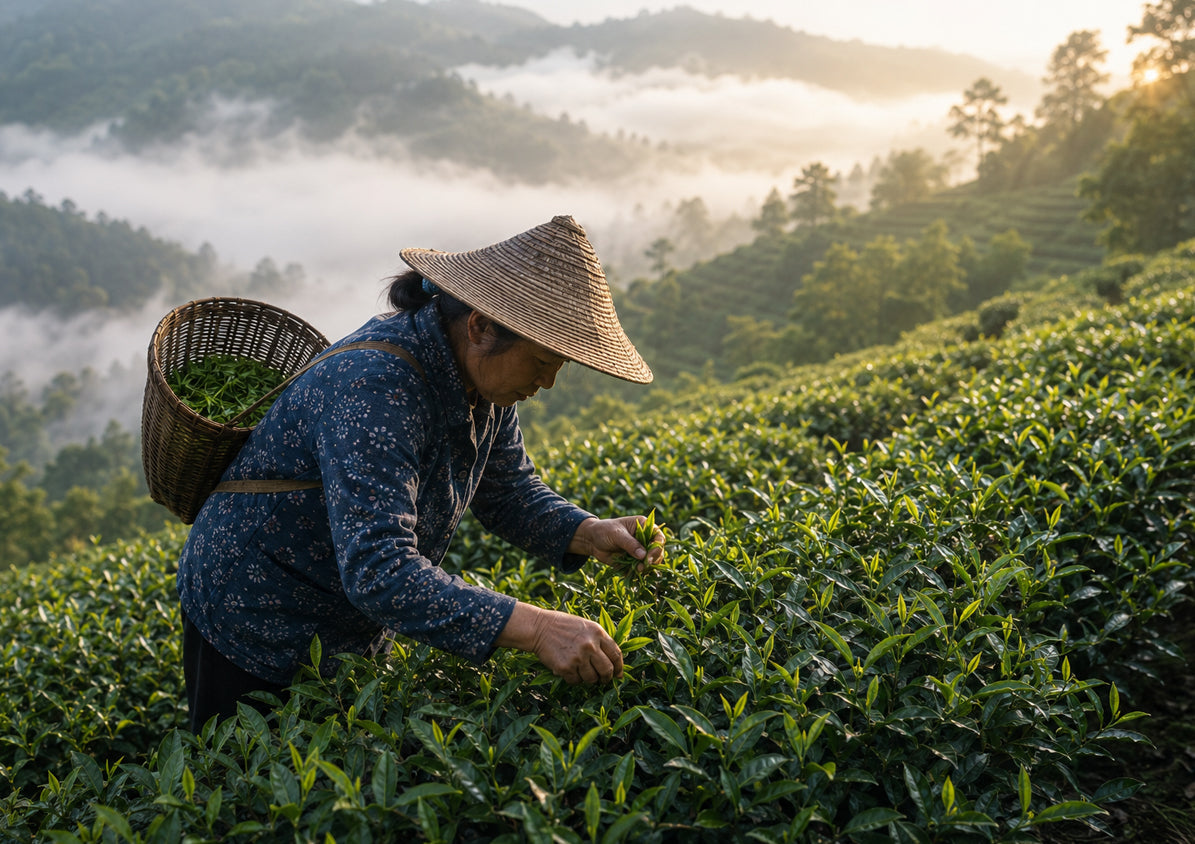
Step 2: Harvesting the Tea Leaves
Harvest season is one of the most important factors affecting tea quality.
Most premium teas are harvested by hand.
Tea pickers carefully select:
-
One bud
-
One bud and one leaf
-
One bud and two leaves
depending on the tea style being produced.
The youngest leaves are often the most prized because they contain higher concentrations of desirable flavor compounds.
Why Hand-Picking Matters
Machine harvesting is faster and less expensive, but premium teas are usually hand-picked because it allows greater precision.
Benefits of hand harvesting include:
-
Better leaf selection
-
Less damage to leaves
-
Higher consistency
-
Superior final quality
Many artisan teas rely entirely on traditional hand harvesting methods.
Step 3: Withering
After harvesting, fresh leaves contain significant moisture.
The first processing stage is known as withering.
During withering:
-
Moisture gradually evaporates
-
Leaves become softer
-
Enzymatic activity begins
-
Aromatic compounds develop
Depending on the tea style, withering may last anywhere from a few hours to over a day.
This stage lays the foundation for future flavor development.
Step 4: Rolling and Shaping
Once the leaves have softened, they are rolled or shaped.
This process serves several purposes:
-
Breaks down cell walls
-
Releases natural oils
-
Prepares leaves for oxidation
-
Creates distinctive leaf shapes
Different tea styles use different shaping techniques.
Examples include:
Green Tea
Often flattened or twisted.
Oolong Tea
Frequently rolled into tight balls.
Black Tea
Typically twisted into long strands.
White Tea
Often minimally shaped to preserve natural appearance.
The visual appearance of tea often reflects centuries of regional craftsmanship.
Step 5: Oxidation — The Stage That Creates Different Types of Tea
Oxidation is perhaps the most important step in tea production.
When tea leaves are exposed to oxygen, natural chemical reactions occur.
These reactions influence:
-
Flavor
-
Aroma
-
Color
-
Texture
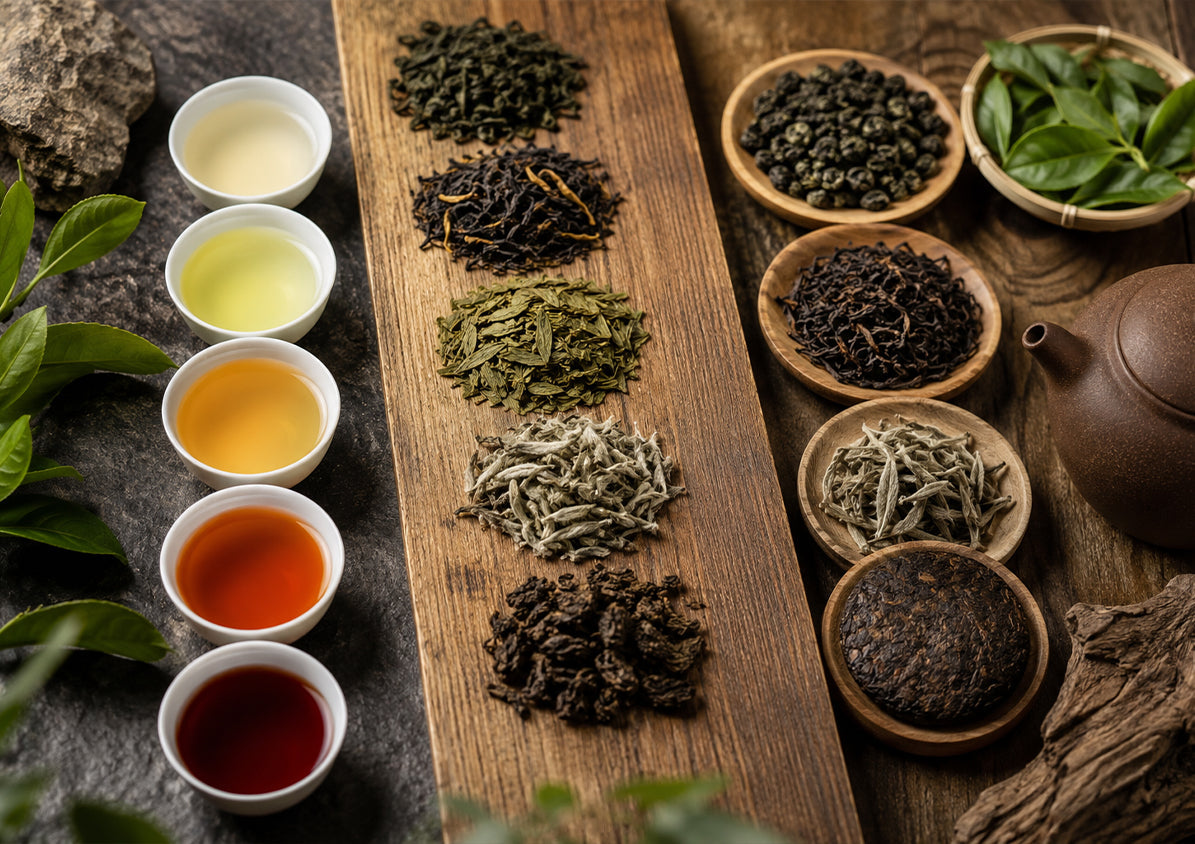
The degree of oxidation determines the type of tea produced.
Green Tea
Oxidation is prevented almost immediately.
Result:
-
Fresh flavor
-
Bright green leaves
-
Vegetal aromas
White Tea
Very light oxidation.
Result:
-
Delicate sweetness
-
Floral notes
-
Gentle character
Oolong Tea
Partial oxidation.
Result:
-
Floral complexity
-
Fruity aromas
-
Layered flavors
Black Tea
Fully oxidized.
Result:
-
Rich body
-
Deep color
-
Bold flavor
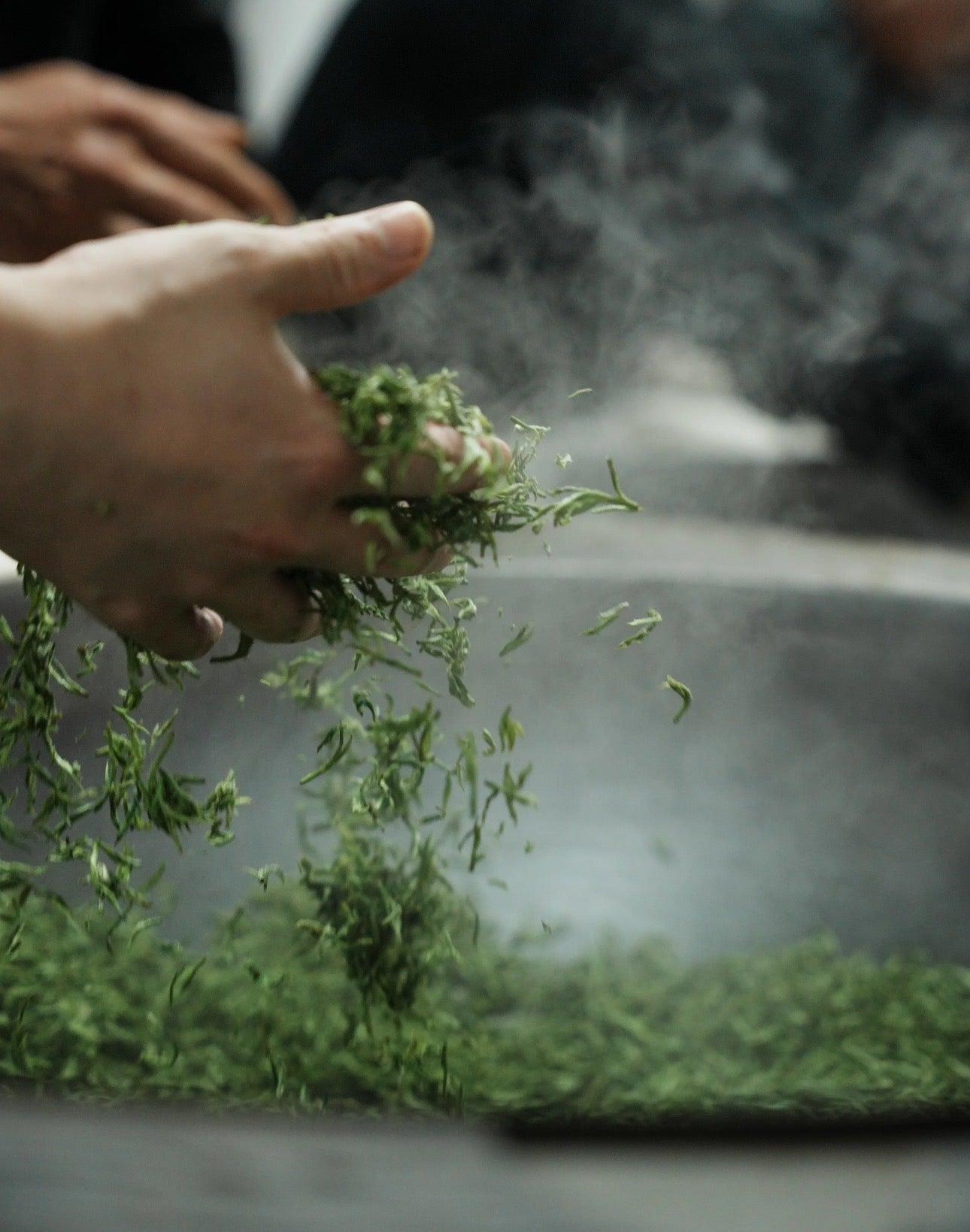
Step 6: Fixation (Kill-Green Process)
For teas that require limited oxidation, heat is applied to stop enzymatic activity.
This process is called:
-
Fixation
-
Kill-green
-
Sha Qing
Depending on regional tradition, leaves may be:
-
Pan-fired
-
Roasted
-
Steamed
This step helps preserve the tea's desired flavor profile and prevents further oxidation.
Step 7: Drying
After shaping and oxidation, tea leaves must be dried.
The goal is to reduce moisture to a stable level suitable for storage.
Drying helps:
-
Preserve freshness
-
Prevent spoilage
-
Stabilize flavor
-
Extend shelf life
Different drying methods create subtle differences in aroma and character.
Common methods include:
-
Hot air drying
-
Charcoal roasting
-
Oven drying
-
Sun drying
Step 8: Sorting and Grading
Once dried, tea is sorted according to:
-
Leaf size
-
Appearance
-
Uniformity
-
Quality
Premium whole-leaf teas are generally separated from broken leaf grades.
Higher-grade teas often feature:
-
Intact leaves
-
Consistent appearance
-
Better brewing performance
However, quality depends on much more than appearance alone.
Flavor remains the ultimate measure.
Step 9: Aging and Fermentation (For Certain Teas)
Some teas undergo additional aging after production.
The most famous example is pu-erh tea.
During aging:
-
Flavor evolves
-
Texture softens
-
Complexity increases
-
New aromas develop
Properly stored aged teas can become highly sought after among collectors and enthusiasts.
Unlike many foods, certain teas improve over time.
Why Different Teas Require Different Production Methods
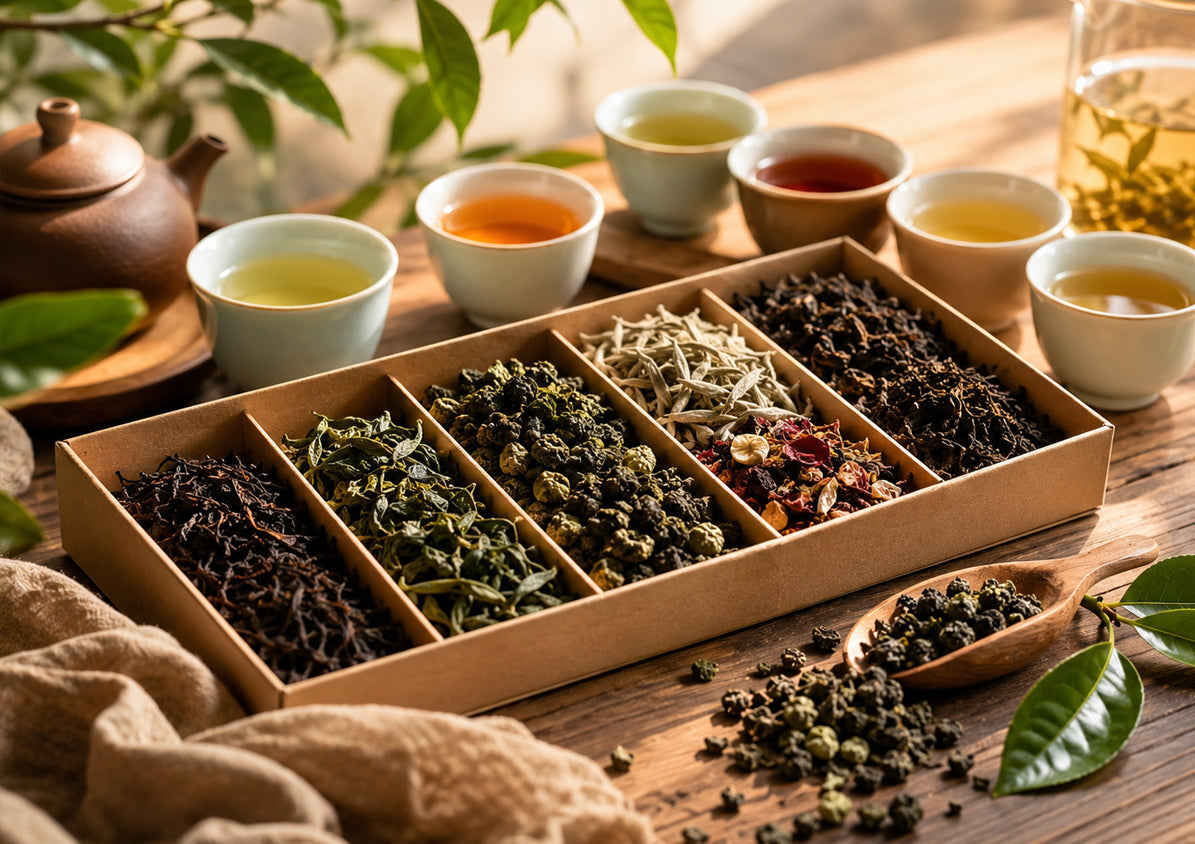
Each tea category follows a unique production path.
| Tea Type | Withering | Oxidation | Roasting | Aging |
|---|---|---|---|---|
| Green Tea | Light | Minimal | Often | Rare |
| White Tea | Moderate | Light | Minimal | Possible |
| Oolong Tea | Moderate | Partial | Common | Sometimes |
| Black Tea | Significant | Full | Sometimes | Rare |
| Pu-erh Tea | Moderate | Special Fermentation | Sometimes | Common |
These differences explain why teas can taste completely different despite originating from the same plant.
The Human Element: Tea Craftsmanship
Modern technology has improved efficiency, but exceptional tea still depends heavily on human expertise.
Tea masters make countless decisions throughout production:
-
Harvest timing
-
Withering duration
-
Oxidation level
-
Roasting intensity
-
Aging conditions
Small adjustments can dramatically affect the final result.
This is why premium artisan tea is often described as both an agricultural product and an art form.
Why Tea Production Influences Price
Many consumers wonder why tea prices vary so dramatically.
The answer often lies in production.
Premium teas require:
-
Skilled labor
-
Careful harvesting
-
Longer processing times
-
Lower production volumes
-
Greater quality control
A handcrafted tea may require significantly more time and expertise than mass-produced alternatives.
The result is often reflected in both quality and price.
How Understanding Tea Production Improves Your Tea Experience
Learning how tea is made helps you appreciate:
-
Why certain teas taste different
-
Why premium teas cost more
-
How craftsmanship affects quality
-
The cultural heritage behind tea
Every cup represents countless hours of work—from the tea garden to the tea maker's hands.
Understanding that journey transforms tea from a simple beverage into a meaningful experience.
The Teavra Commitment to Quality
At Teavra, we believe exceptional tea begins long before the brewing process.
That's why we carefully select teas that reflect:
-
Authentic origins
-
Traditional craftsmanship
-
Thoughtful processing
-
Outstanding flavor
-
Premium loose-leaf quality
Every tea tells a story of land, climate, harvest, and human skill.
Our mission is to bring those stories to tea lovers around the world through carefully curated artisan teas that honor the traditions behind every leaf.
Final Thoughts
Tea production is far more than a manufacturing process.
It is a delicate collaboration between nature and craftsmanship.
From cultivation and harvesting to oxidation, drying, and aging, every step influences what ultimately arrives in your cup.
The next time you brew your favorite tea, take a moment to appreciate the journey behind it.
Because every remarkable cup begins with a single leaf—and generations of knowledge dedicated to bringing out its very best.
Explore premium artisan loose-leaf teas and discover the craftsmanship behind every cup at Teavra.
Frequently Asked Questions
What plant is used to make tea?
Most traditional teas are made from the Camellia sinensis plant.
What determines whether tea becomes green tea or black tea?
The primary difference is the level of oxidation during processing.
Why is hand-picked tea often more expensive?
Hand harvesting allows for more precise leaf selection and generally produces higher-quality tea.
What is oxidation in tea production?
Oxidation is a natural chemical reaction that changes the flavor, color, and aroma of tea leaves after harvesting.
Does tea improve with age?
Some teas, especially pu-erh tea and certain white teas, can develop additional complexity and value through proper aging.

Leave a comment
This site is protected by hCaptcha and the hCaptcha Privacy Policy and Terms of Service apply.