
A Guide to Proper Tea Storage: Keeping Your Loose-Leaf & Pu-erh Fresh
Why Proper Tea Storage Matters
You may have invested in a premium loose-leaf tea, carefully selected for its aroma, flavor, and craftsmanship. But even the finest tea can lose its character if stored incorrectly.
Tea leaves are surprisingly sensitive to their environment. Exposure to moisture, sunlight, heat, and strong odors can quickly diminish the freshness and complexity that make great tea so enjoyable.
Proper storage helps preserve:
-
Aroma
-
Flavor
-
Freshness
-
Appearance
-
Brewing quality
For some teas, especially pu-erh and certain white teas, storage can even influence how the tea develops over time.
The Five Biggest Enemies of Tea
To understand tea storage, it helps to know what damages tea most.
1. Moisture
Tea leaves absorb moisture easily. Excess humidity can cause tea to lose flavor, become stale, or even develop mold.
2. Light
Direct sunlight breaks down delicate compounds inside tea leaves and accelerates aging.
3. Heat
High temperatures speed up flavor deterioration and reduce freshness.
4. Oxygen
Long-term exposure to air gradually weakens aroma and flavor.
5. Strong Odors
Tea acts like a sponge for surrounding smells. Storing tea near coffee, spices, perfumes, or cleaning products can permanently alter its flavor.
Best Containers for Tea Storage
The ideal tea container should be:
-
Airtight
-
Opaque
-
Food-safe
-
Odor-free
Popular options include:
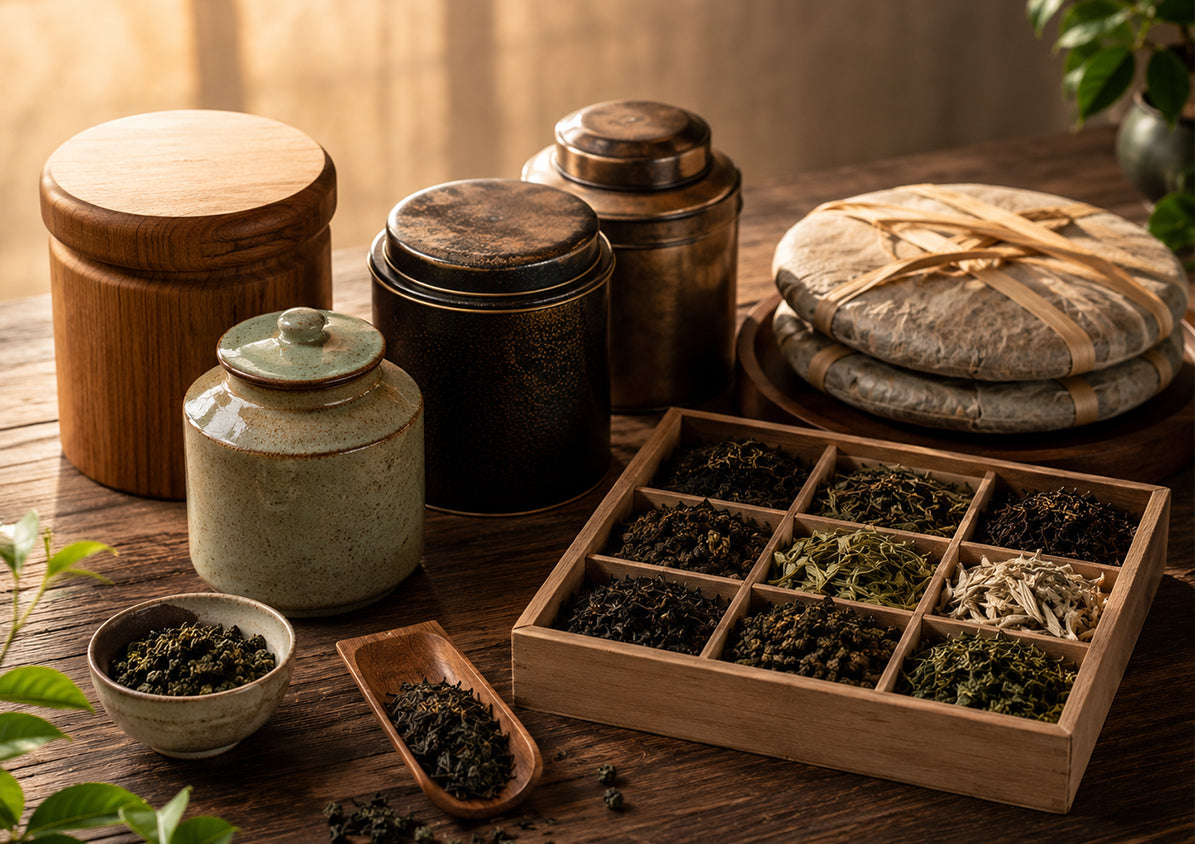
Tea Tins
One of the best choices for everyday storage. Metal tins block light and help reduce air exposure.
Ceramic Containers
Traditional and attractive, especially when equipped with a tight-fitting lid.
High-Quality Resealable Pouches
Many premium teas are packaged in multilayer bags designed specifically to protect freshness.
Avoid clear glass jars unless they are kept inside a dark cabinet away from light.
How to Store Different Types of Tea
Although general storage principles apply to all teas, some varieties require special attention.
Green Tea
Green tea is the most delicate category.
For maximum freshness:
-
Keep airtight
-
Store in a cool location
-
Avoid heat and sunlight
-
Consume relatively quickly after opening
Because green tea is minimally oxidized, it loses freshness faster than many other tea types.
Oolong Tea
Oolong tea benefits from:
-
Airtight storage
-
Stable temperatures
-
Protection from strong odors
Lightly oxidized oolongs should be treated similarly to green tea, while roasted oolongs are generally more forgiving.
Black Tea
Black tea is relatively stable.
When stored properly, it can maintain excellent quality for extended periods.
Simply keep it:
-
Dry
-
Airtight
-
Away from sunlight
White Tea
White tea occupies a unique position in the tea world.
Fresh white tea offers delicate floral notes, while properly stored white tea may develop greater depth and sweetness over time.
Store in:
-
Dry conditions
-
Clean environments
-
Stable temperatures
Special Storage Considerations for Pu-erh Tea
Pu-erh tea is unlike most other teas.
Rather than trying to stop all aging, many tea enthusiasts intentionally allow pu-erh to mature slowly over time.
Proper pu-erh storage requires balance.
Avoid Excessive Humidity
Too much moisture can create unwanted mold and unpleasant flavors.
Avoid Overly Dry Conditions
Extremely dry environments may slow the tea's natural aging process.
Allow Gentle Air Exchange
Unlike green tea, pu-erh should not always be vacuum-sealed for long-term aging.
Keep Away from Strong Odors
Because pu-erh ages over time, it can absorb environmental smells that may affect its future character.
When stored correctly, pu-erh can continue evolving for years and sometimes even decades.
Should Tea Be Refrigerated?
For most teas, refrigeration is unnecessary.
In fact, frequent temperature changes can introduce condensation and moisture.
Unless you have a specific reason and proper packaging, storing tea in a cool, dry cabinet is usually the better option.
How Long Does Tea Stay Fresh?
Freshness varies by tea type.
Green Tea
Best enjoyed within months of opening.
Oolong Tea
Often remains fresh for a year or longer when stored properly.
Black Tea
Can maintain quality for extended periods.
White Tea
May evolve positively over time.
Pu-erh Tea
Can continue aging and developing for many years.
Remember: tea doesn't usually "expire" like fresh food, but poor storage can significantly reduce quality.
Signs Your Tea Has Been Stored Improperly
Watch for:
-
Flat or weak aroma
-
Loss of flavor complexity
-
Stale taste
-
Visible moisture damage
-
Mold growth
-
Absorbed foreign odors
If your tea no longer smells appealing before brewing, storage conditions may be the cause.
Simple Tea Storage Rules to Remember
If you remember only one thing, remember this:
Keep tea cool, dry, dark, and away from strong odors.
These simple principles will protect most teas and help preserve the qualities that make premium loose-leaf tea worth enjoying.
The Teavra Commitment to Quality
At Teavra, we carefully select and package our teas to help preserve their freshness from origin to cup.
Whether you're exploring green tea, oolong tea, black tea, white tea, or aged pu-erh, proper storage ensures you experience the tea exactly as it was intended.
A little care goes a long way.
Because great tea deserves great storage.
Frequently Asked Questions
What is the best container for storing tea?
Airtight metal tins, ceramic containers, or high-quality resealable tea pouches are among the best options.
Can tea go bad?
Tea rarely spoils when stored properly, but it can lose aroma, flavor, and freshness over time.
Should pu-erh tea be stored differently?
Yes. Pu-erh benefits from stable conditions and gentle airflow that support natural aging.
Is it okay to store tea in glass jars?
Only if they are kept away from sunlight. Light exposure can reduce tea quality.
What is the biggest mistake people make when storing tea?
Keeping tea near moisture, sunlight, heat sources, or strong-smelling foods and products.

Leave a comment
This site is protected by hCaptcha and the hCaptcha Privacy Policy and Terms of Service apply.